


A Faster, Smarter Way to Build:
Aluminium Formwork at 26 Mzizi Court.
Something different is about to take shape at 26 Mzizi Court. Blocks D, E and F will be constructed using aluminium formwork, a building system that allows walls and floor slabs to be cast together with greater speed, precision and consistency. Before the first panel goes up, here is a closer look at how the system works, why it has been adopted at Mzizi, and what it means for your future home.
Why Change How We Build?
Most buildings you see going up around Nairobi today typically follow the same method: a reinforced concrete frame is cast first, then concrete block walls are laid in, and finally everything is plastered smoothly by hand. While this conventional approach works, it involves several sequential construction activities that can affect the pace of delivery, and with Kenya’s housing shortage, demand for new homes far outpaces what the industry delivers each year. This means people need faster ways to build without giving up quality.
Aluminium formwork offers a more integrated approach. It is a construction technology that has been adopted internationally and is increasingly being used by developers locally to improve construction efficiency while maintaining the required structural and quality standards. This is why it has been selected for Blocks D, E and F at Mzizi.
What exactly is Aluminium formwork?
Instead of building a frame first and filling in walls afterward, aluminium formwork allows walls, columns where applicable, beams, and floor slabs to be formed and cast as part of the same construction cycle.
Precision-engineered aluminium panels are locked together on site to form a complete mould for an entire floor.
Reinforcement, electrical conduits, and plumbing provisions are incorporated before concrete is poured into the formwork.
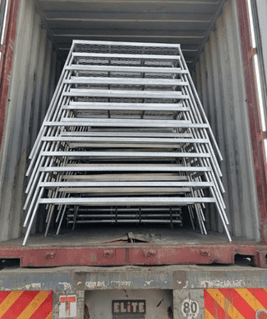
Once the concrete has achieved the required strength, the walls and floor come out as a single, seamless, monolithic structure. The panels are then unclipped, cleaned, and lifted to the next floor for reuse.
How it comes together on site:
Site readiness
Reinforcement, electrical conduits and plumbing sleeves for the first level are completed and checked against the structural drawings. Reference lines are then marked out to ensure that the formwork is positioned accurately.
Panel erection
Corner panels go up first, followed by wall panels, slab corners, beams, and finally the slab panels. Wedge pins and flat ties connect the panels to create a rigid and stable formwork system ready for the concrete pour.
Concrete pour
Concrete is poured uniformly and vibrated to eliminate air pockets, producing walls and slabs in one continuous, monolithic pour.
Curing, dismantling and reuse
Once the concrete reaches the required strength, panels are carefully removed, cleaned, and moved up to the next floor, ready to be reused.
Because the same panels are reused floor after floor, once the cycle gets going, each level will go up in a matter of weeks rather than the months a blockwork floor typically takes.
Why This Matters for You
Stronger, safer homes
Casting walls and slabs together creates a continuous reinforced-concrete structure designed to provide a robust and durable building system.
A smoother finish
The precision of the aluminium panels produces straight, consistent concrete surfaces, which can reduce the need for extensive plastering and contribute to cleaner architectural finishes.
Faster delivery
Reusable panels and a standardized process mean floors come up far quicker than conventional construction, translating to an earlier move-in date.
Precision and Consistency
Every unit on every floor is dimensionally identical, so what you see on one floor is exactly what you will see on the other.
The Environmental Case
Aluminium panels are engineered for hundreds of reuses, which sharply cuts down on construction waste over the life of a project. Skipping the plastering stage also reduces the amount of cement, sand, and water used purely for finishing. And at the end of its working life, the aluminium itself is fully recyclable, rather than ending up in a landfill.
What’s Next?
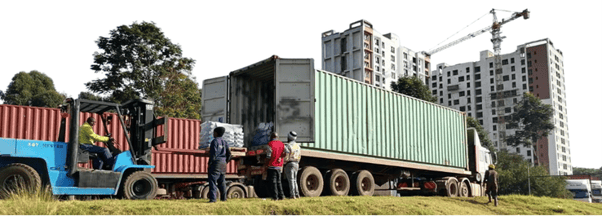
With the formwork now on site and preparation underway, the first panels are expected to go up soon. For Blocks D, E, and F, this marks the beginning of a new construction phase, one where technology, precision and efficiency come together to shape the next generation of homes at 26 Mzizi Court.
Have questions about the construction process at Mzizi Court? Reach out to our team, and we would be happy to take you behind the scenes and tell you more about how your future home is taking shape.
— An Article by Ednah Mwendwa, Projects Associate, Centum Real Estate